Showing posts with label psychology. Show all posts

Monday, April 9, 2012

The Halo Effect


Google has always had an air of mystic around them, as a creative and honest company. It seems that even though they are a multi-billion dollar company they don't have the stigma of other tech firms of a similar size. People trust Google far more with their data and information than most high tech firms. You search using their search engine and store you email in their servers, and very few people question Google's good intentions to let you use their stuff for "free". It's almost as if because of the early reputation that Google gained as a open and honest company that enabled you to search more effectively and easily on the internet without in your face advertising and banner ads that they have now become an authentically honest company with a certain playful approach to everything. Of course, the reality of a multi-billion dollar company such as Google is that they have many of the same motivations and drives as any large corporation, they wish to make money and the easiest way to do that is to use our collected data and information to influence us. So how has this general positive perception of Google occurred? This is something that can be attributed to what psychologists call the "Halo Effect".

The Halo effect is essentially a biased heuristic that we have when we see something positive in someone or something we like. We are more likely to transfer those beliefs into other traits about that person or object. So in this instance the early reputation of Google that was perceived and promoted by people has now become the accepted attitude of Google to everything they do. They are now considered an honest open and trustworthy company, whether or not this is true, it is at least perceived that way. The same thing happens with real people, if someone you know has a reputation as being a "good" person through something they may have done in the past you will be inclined to transfer that perception to anything they do, you might assume they are more likely to give to charity for example, or may be more likely to take part in community activities, whether or not that would actually be true. The tendency is to assume if a certain trait is true such as being good, then you automatically assume that other qualities such as being kind, generous and humorous are also true of that person. Interestingly, it is even suggested that the attractiveness of someone can influence our perceptions of them without even knowing anything about them. We assume that attractive people are somehow nicer people.

The Halo effect has it's reverse referred to as the "devil effect" which as expected is if a brand or person has a negative trait, then the bias tends to influence all considerations of other traits towards the negative feelings.

Particularly in business this powerful and often subconscious effect is one that should not be overlook when considering any brand placement or messaging. It seems that it can work positively in a brands favor when encouraging positive marketing and PR, Google and Apple have definitely gained from this effect. However the reverse can also alter people's perceptions and these are the hardest influences to remove from peoples minds, I think the best example is Microsoft, that no matter how they innovate, has always had the stigma of being a monopolistic giant and carries even today a generally negative perception in the public mind. I think also it is important to think closer to ourselves about how we judge other people, we should try and be a little more conscious of what we truly know about other people and not fall into the trap of judging all things by limited knowledge. 


Sunday, April 1, 2012

Knowing Yourselves


We have all been in situations in which we don't quite feel like ourselves, it's almost as if someone else looks out through our eyes and takes over for a short while. Our friends notice and exclaim that we don't appear to be ourselves. Of course nothing really changes from our point of view we just respond to our environment and play the role that we think best suits that moment. Many thing can trigger this from work to anger from parties to gambling can release alternate versions of ourselves. It's almost as if we have multiple personalities within us.

Rita Carter in her book "Multiplicity", puts forward this very idea that within each of us are these multiple personalities and how they can affect and influence each other, sometimes in good ways and at other times in negative ways. She suggests that by better understanding ourselves and these alternate selves we can begin to affect how we feel and act. We can no longer think of ourselves as a single person or character but as summation of many selves working inside us.

First thing to make clear is that she is not talking about the mental illness of multiple personality disorder, where you have little control or consciousness over the people within you. She is suggesting that we are complex individuals with the capacity to behave differently in different situations and under different conditions. Her books helps you recognize and discover these personalities within and start to map them to better understand how they influence you in your choices and decision making. She argues that nobody is a single personality but is in fact made up of multiple characters within us, the important thing to do is recognize those that influence you in a positive way and those that do not and start to control which you wish to grow and those you wish to squash.

Her suggestion, is that most people have a few major personalities with many supporting minor personalities. The major personalities are those that guide a majority of our decision making, and whom we may most closely relate to, the minor personalities add to these cast members with less seen but equally important aspects of our character. It is very comparable to acting and playing parts within our lives all with the same shared life and knowledge.

She explains how these personalities can be mapped using the concepts of the OCEAN big 5 personality traits approach to mapping character. OCEAN is an acronym for:

Openness
Conscientiousness
Extroversion
Agreeableness
Neuroticism

This framework is a robust way for people to measure their personality type against. In Rita's book she maps these onto to a circular diagram with the opposing traits around the circle. Then through a series of questions you can begin to map your various personalities on the disgram to better understand their role in your mind.

The concept Rita puts forward is a fair idea and certainly it is consistent with new discoveries in science and psychology that she supports her argument with. It raises many intriguing questions. How well we can control these personality types is questionable, but at the very least recognizing them is a start in allowing you be aware when you might be behaving differently than your usual self. Equally interesting for me is the insight it gives to understanding ourselves and others and why people can appear inconsistent in some circumstances. It suggest that interviewing people for market research or using any kind of people study is going to only give a small insight to the complete domain of peoples thoughts and actions. As this area of study expands and gains insights it is going to go along way to explain many of the choices and decisions we make. Rita Carters book is a great introduction to these new ideas of the many selves within us.

Sunday, March 11, 2012

Why do you Blog?

Small article discussing the reasons people blog. I know that personally I started blogging to fill in the gap I felt I had with having knowledge and wanting to find others that were interested. Some people make money from blogging and have other motivations, but I believe most do it as an outlet for creativity and self expression.

Seth Godin somes it up nicely.


"I blog because I don't really have a choice. The ideas in me insist on being shared, and this is the least painful way I can find to do it!"


Other reasons the article puts forward include.

  • To maintain a routine- motivation and accountability
  • To hone the craft of writing
  • To air new and provocative ideas
  • To spread cutting-edge information or timely opinion
  • To connect with a like-minded community
  • To forward the tradition of storytelling
  • To build resume or clout
  • To express creativity
  • To find catharsis after a traumatic event
  • To attract web traffic
  • To rant or vent
  • To see our names in print - ego

Saturday, March 3, 2012

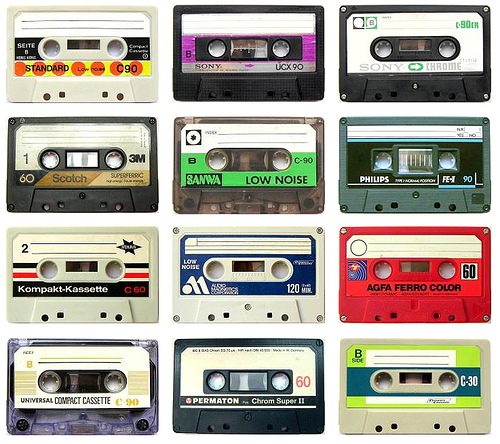
Playing Tapes in your Mind

How often have you found yourself wandering around a store with various shiny items under glass that have their price tags on display, and no matter how hard you try you cannot get over the beauty of the more expensive ones on display. They are all so different but definitely the turquoise necklace is the best one there, but what a shame is so expensive. Well it must surely be the most carefully made and highest quality item on display or why else would it be so expensive. I think it must be priced high for that reason, I think it makes sense to buy it. Well it seems this may not necessarily be the case. Let's stop the tape and rewind. 

Robert Cialdini, in his fantastic book on the psychology of persuasion talks of a story in which just such a misconception occurred, and how a piece of jewelry that hadn't sold for weeks suddenly became more appealing and sold by being mislabeled with a higher price. So what might have occurred to make the item more desirable? Well he goes on the explain that we appear to have prerecorded fixed action patterns in our minds that are triggered when the right trigger features occur. In this case the turquoise and high price tag made us assume a natural correlation. These thought streams can be thought of as tapes that play in our subconscious that raise our emotions on the right cues and that influence our decision making. These trigger features don't have to be a complex and don't have to be large and prominent, it can be a small specific aspect that triggers the tape to play. The people that bought the more expensive jewelry played the expensive=good tape and probably believed in the idea that you get what you pay for. This doesn't of course work the same for everyone but it does show itself in many situations. We play these prerecorded tapes of assumptions once they are triggered. Much of this occurs because people have had similar experiences in the past and base new estimations on these past assumptions.

These fixed action patterns, are not just about consumption, they can show themselves in many situations. Nature has given us these abilities not as a curse but as a gift that allow us to quickly evaluate a situation or new stimulus as threatening or safe for example. It allows us to see someone as an enemy or friend. It also allows us to think about and empathize with another by playing what we imagine someone else may be feeling or needing. Robert goes on the talk about how the trigger word "because" can change our willingness to allow someone in front of us in a queue. Without this word and an excuse following it, even if the excuse is nonsensical, we are less likely to allow someone to queue jump. The "because" statement is needed to activate the feeling of empathy in us that this person must have good reason to ask to jump ahead. We generally want to be social and friendly and would if our needs are less, be willing to allow someone whom seems agitated to go ahead of us.

So why do we have these strange tapes playing on our minds, well it makes most sense when you think about the amount of information we have to digest everyday, quite simply we don't have enough time to analyze each and every piece information we receive, so we shortcut the process where we can and most times it saves us a lot of work and time so we can make assumptions and move on. This is just a modetrn interpretation of our evolved sense of quick evaluation of situations and people. Of course, as these examples show this process can be misleading and used against us by those that want to adjust our interpreter. This is what ultimately leads us to stereotypes and generally they are harmless ways the brain labels and categorizes the World around it, but of course as history has shown these can be misguided and lead us to wrongful conclusions.

This is just one of the many ways our mind works and does an amazing job of helping us process our complex Worlds. Just be aware that not always are the assumptions you make the correct ones, you may have put the tape in and started playing the fixed response, but sometimes you have to stop the tape and think a little more carefully and then you can see the truth a little better.

Saturday, February 25, 2012

Loss Aversion


The pain of loss is felt so deeply at an emotional level that we tend to go out of our way to avoid this feeling at all costs. Amos Tversky and Daniel Kahneman demonstrated this experimentally with testing. This is referred to as loss aversion, the act of trying to remove or reduce the sensation of loss with the aim of making gains. This persuasive force is so powerful that sometimes we base important decisions on it, without a more rational thought to the consequences.

Of course the advertisers and marketing types all are aware of this force and use it to their advantage when they feel they want to play some persuasion games. They like to get you to take free gifts and have things sent to your home to try, and return if you are unhappy, how often have you returned that item you had delivered? Think also about gambling and the power of the casinos to help people keep putting more money down to just make back all those losses.

It has been suggested by Kahneman and Tversky that this force is twice as powerful as the feeling of gain, and that makes it very effective and important in peoples decision making. It has also lead to belief that people generally over valuing things they already own, more than their material worth. Some have questioned the actual existence of loss aversion, and I am sure that it does not always apply in all instances, such as small pay off situations, situations that have large delays and non competitive scenarios. However, I definitely believe that there is something to the idea and have certainly experienced the sensation first hand in watching my money on the stock market or deciding to give old stuff to a donation center.

The power of ownership and the feeling of lose are definitely not good feelings and although we can over come them with rational thinking, we all know we are not always in control of those decisions consciously. Next time you order a product online or receive a gift from a company and realize that it is not quite what you wanted, ask yourself why you don't want to send it back, is it because of the inconvenience, or just maybe you don't want to loose out having something you now own.

Sunday, February 19, 2012

PinInterest - Discovery versus Searching


Nothing is more frustrating than having too so much information and not enough time or motivation to filter through it all to get to the one result we want. No where is this more apparent than on the internet today, even with powerful search engines like Google, the results we get back are often hundreds of pages and somewhat biased to the guy who pays the most. As a user and more importantly as a consumer we often don't get to the real information we want very efficiently if at all. It all ends up being a bad experience searching doesn't really lead to a satisfactory result in most cases. Searching is easy and simple, but finding the right results to your interest is a real problem. So what other alternatives might there be?

Well, a new site gaining popularity is PinInterest and maybe suggests another alternative for people who are searching for items online. The concept of PinInterest is simple, people get to clip things they like, the emphasis is on visual elements to keep it interesting. Users are in control of gathering things they like and sharing them with others. This along with making the site fun and enjoyable, easy to use and about interests rather than friends make for an interesting difference to normal searching. This article lists 10 reasons why pininterest is proving successful.


The new paradigm is discovery rather than searching for content. Finding people with similar interests that may have found more relevant content on the web. The experience, is much more like shopping used to be, with the catalog feel of browsing glossy images, but now with the added dimension of real time updating and user reviews. The new value proposition is that in some instances the things people are pinning are recommendations and this will be more efficient at bubbling the more valuable content to the top of those groups. For selling items to consumers this changes how we think about searching and finding items. For example if we want to find the best running shoes, instead of Google'ing the browser, we can see what actual runners prefer and are talking about most in these groups. It becomes a type of crowd-sourced recommendation engine and gives you access to those that are in the know. Users are now more responsible for filtering out the good content they find from the bad. As of right now there is also less push on those companies that pay the most to appear at the top of the list. Instead of always seeing Nike as No.1 maybe you might discover something new and better, that you hadn't expected

It has been seen time and again the power of social recommendation. Amazon and their ratings, as well as, reviews has become the norm for any company online that wants to help consumers make their selections. Psychology has recognized the power of in-group bias, where we tend to give preferential treatment to those we picture as in our own group. Also the effect of the authority bias leads us to trust the opinions of those considered experts in the group we are consulting with. These two conditions play well in the discovery form of searching, making us more likely to follow the leads that certain people may suggest rather than a series of return results from a search engine that maybe have no attributed author or social group attached to them. Other conditions that fall out of this kind of searching includes, feelings of having access to exclusive insight to maybe less mainstream content, increasing our perceptions of its value. There is also the surprise element of finding something unexpected or new that you maybe hadn't considered before and of course we mustn't forget the power of reducing choices as helping people get to a decision.

With all these powerful psychological forces acting on someone in the new PinInterest site, it is no wonder that it is already proving a very popular destination on the web and new way to discover and find content and consumables, as well as, interesting topics and subjects you can follow.

Wednesday, February 15, 2012

7 things you need to find your flow moments


How many times have you sat down to do something and suddenly you look up at the clock and time seems to have slipped away from you and suddenly you realize that you have spent hours working on something but it felt like 10 minutes of time passed. Time flies when you are having fun, is how my mum would summarize this effect. Well it seems that these moments can be attributed to being in a certain mindset and when certain conditions are met these moments are repeatable.

Mihaly Csikszentmihalyi a Hungarian psychology professor has studied these moments of "flow" as he calls them and has outlined the criteria for them to occur. Here are 7 things that will help you find your flow moments.

1. The task has to have a chance of being complete-able
2. You should have time set aside for concentrating on the task without distraction
3. The task needs to have clear goals, so you know what you are aiming to work on
4. It helps to have immediate feedback, so you know how things are progressing
5. Having deep but effortless involvement, will help reduce worries that may inhibit progress
6. You need to have a sense of control over the outcome of what you are working on
7. It helps to not have a conscious reminder of time, then time will cease to have meaning.

Flow moments facilitate concentration, by making everyday activities distinct and meaningful from normal everyday activities. They also make control possible giving a sense of self fulfillment. These moments are very similar in characteristics to what Daniel Pink, would refer to as "Drive" the motivational factors for intrinsic desires in performing any cognitive tasks. Daniel suggests in his book, that people are inspired to work harder at cognitive tasks when they are aiming to fulfill 3 fundamental needs, mastery, purpose and autonomy. This to me falls inline with what finding flow is all about. That sense of being inspired to increase ones level of mastery, with a sense of control and with some guiding purpose.

Flow moments require:

1. Rules (not too open ended)
2. Require learning new skills (mastery)
3. Set up goals ( have purpose)
4. provide feedback (sense of achievement)

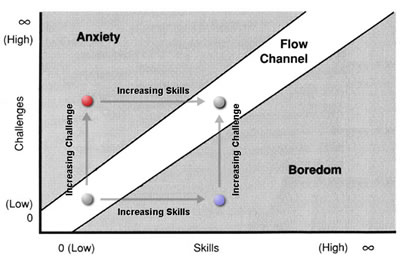
This concept is nicely summarized visually in a couple of graphs. The first show the channel of flow, between anxiety of a task being to hard, but challenging enough to make us work at it, and boredom from a skills stand point that the task it too trivial that it doesn't challenge us enough and is uninspiring.


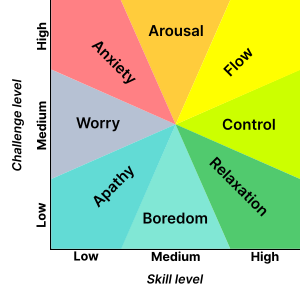
The other graph shows a more granular break down of the states of mind that occur around the flow channel.


So next time you start into a project and the time disappeared all too quickly, thin to yourself what made that happen and how you may go about making it happen again. Try to make every working moment a flow moment and your sense of purpose and self fulfillment will surely grow.

Saturday, February 11, 2012

Sharks and the Availability Bias


Do deer or sharks kill more people a year? If you look into stories covered in the media or reports on the internet you would find all kinds of horror stories and tales of sharks attacks and fatalities. Certainly most people have a very rational and natural fear of this large tooth filled animal. Steven Spielberg film Jaws went a long way to a general fear of being in shark infested waters for swimmers and paddlers. It is fair to say that if you like me were asked this question you would probably answer that of course sharks are more dangerous and attack more people a year than humble docile deer. The truth is a little more surprising.

You would actually be wrong, in fact deer kill many more people every year in car accidents than sharks attacking swimmers. The poor shark has become the victim of our own imaginations. Although I would still prefer to stroke a deer than a shark, the truth tell us that the shark is persecuted by our beliefs and this can of course have negative consequences if making an important uninformed decision. If we are not properly informed the decision could well be the wrong one and have a consequence for the shark that is unjustified. So what might be happening here. Well it seems this is part of what is know in psychology as the Availability Bias.

Availability Bias is a cognitive bias that generally causes us to over estimate a probable outcome based on how recently or well a memory is stored in our brains. So in the instance of the shark comparison because they have such a strong mental image for us, heightened by the news stories, internet tales and films, we have a stronger belief that this animal is more likely to attack us and base our belief on how easily we recall the shark in our minds. This incorrect information is the result of the availability bias. This the same condition that makes people fear flying when in fact there are far more fatal car accidents. The recall of the information is more likely to be based on how often and when we last heard of a similar event.

This bias can also affect how you approach a problem or business decision. You might jump to conclusion based on opinion and subjective information. The information you use may also be subject to this bias. Care must be taken when making assumptions about consumers and users of products. Without the real data or study of the target people it is too easy to make sweeping statements based on incorrect information. You might for example make a decision based on assumptions about the users preferences that are general opinion rather than fact. Do girls always like pink rather than blue? Do Apple consumers really hate Microsoft? Yes the media paints these pictures but that doesn't make them absolutely true, I am sure that some people buy Apple iPhones, but use Windows PC's at work, or there are girls out there that actually hate pink. The point being made here is that the availability bias can creep into product and service design as well as business decision very easily if the choice is made based on opinion rather than facts, or testing. We shouldn't rely on our most recent memory of this in the news or the last time we saw this product in use or use as the standard opinion of a small group of people. It is important to not allow this bias to cause us to make the wrong decision, as it can be quite incorrect.

Of course this says a lot about how we rely on the news, opinions, ratings and stories of others to inform our decisions. This is why we should be aware and careful the next time we jump to a conclusion without a little more research into the truth.

Thursday, February 2, 2012

Buying In

Just about to finish reading "Buying In - What we buy and Who we are" by Rob Walker. I good read for anyone that is involved in selling stuff to consumers through branding and marketing efforts. It goes further than a previous book I read about consumer traits (Spent - Geoffrey Millar) and how we buy stuff to show off our individual personalities through evolutionary trait display. This book takes a slightly different view that suggest that we buy stuff more to support our internal narrative about ourselves, and not necessarily about showing off to others.

Lot's of great examples and arguments that support the concept. Found it to be an easy read and insightful. Observations of the current consumer space and the issues that today's marketing has to contend with compared to more traditional approaches. I think some very powerful ideas are put forward about branding and how people are not so much resisting branding but more about adopting the concepts and language of branding to support their own internal self fulfillment, as suggested on Maslow's heirarchy of needs.

Branding is a big focus in the book and definitely it makes you appreciate the power of the branding language, and how much is now part of our culture. It is fascinating how it has become something that we can take part in and add to the conversations, rather than resist as Naomi Klein suggest in her book " No Logo". Brands are being embraced rather than repelled by today's consumers and especially among the youth and new start ups. The main take away message from the book is really that consumer behavior today is and always has been about our stories we tell ourselves, it is about who we are and what we believe, branding is part of that story telling process and is being used as such by today's consumers not rejected.

Wednesday, February 1, 2012

Psychology of Color


An interesting summary of some of the psychology associated with color. I would imagine that these associations are not all culturally the same throughout the World, but at least it is an acceptable look into western color concepts.

Saturday, January 28, 2012

Maslow's Hierarchy of Needs


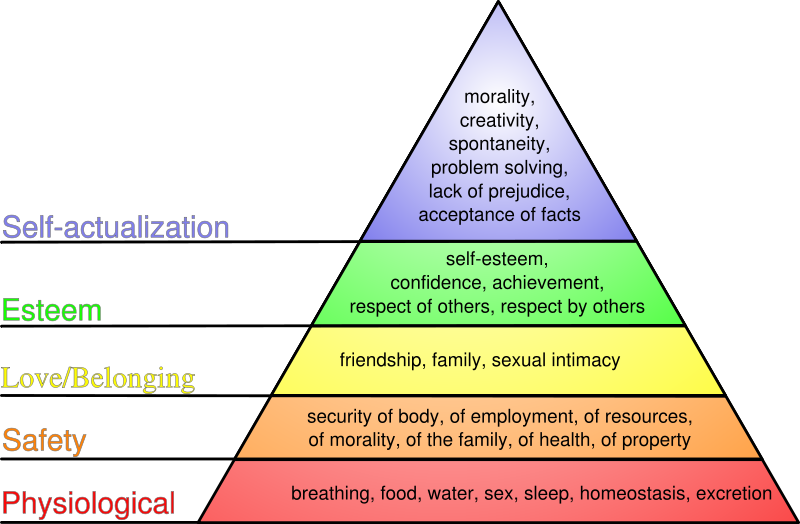
Most of our decisions are a result of intrinsic motivations that we have through our day to day life. Some we are aware of and many appear to affect us on a deep unconscious level. These motivations and needs can be the desire to eat and be healthy, to the desire to look good and be accepted by our peers. In 1943 Abraham Maslow proposed a theory of human motivation that he placed into a hierarchy with basic physiological needs such as breathing, food and water that are needed for survival at the bottom of the structure to self actualization, and self esteem at the top.
maslow#39;s hierarchy of needs 
This diagram can prove helpful in understanding the importance of motivation when making decisions for a given situation. The real value for design in this diagram is that when planning a new product or promotional piece, then you are more able to think clearly about what needs you may be addressing and how important they are to the individual. Very often you want a new product to solve a particular problem, and that may be a motivation lower on the needs hierarchy suggesting it is fundamental desire of many to be healthy for example, but then you want to attach aspiration imagery and language that appeals to a higher need for a product to allow the user to achieve a higher level of creativity or self esteem. The concepts Maslow put forward are guides to the things that are important to us, after the basic needs are met it is important to understand the importance of the higher needs for us to ultimately become more self fulfilled and reach a transcendent state of being. The goal of reaching all that you can be is the concept in this diagram, once all things lower in the hierarchy are resolved then you can become yourself. The concept has received criticism about being very ethnocentric, as it doesn't express the differences of social and intellectual needs for those born into individualistic society and those raised in a collectivist society, where the acceptance and community will outweigh the needs for freedom and individuality. It is most definitely about the individual, which makes sense considering Maslow was from the United States and lived in an individualistic society. None the less it does give a insight into some motivations of people and especially consumers from many parts of the World that are mostly looking for self fulfillment. The flow from survival, comfort and psychological needs into self actualization and transcendence is an important part of understanding the motivations we have in given situations, it also goes a long way to explaining some of our habits and how external influences can affect our decisions. Also, as you browse the hierarchy of the diagram, you see how friendship, family and respect have lead to such social networking sites as facebook and twitter not to mention how blogging itself is helping in our need for creativity and self actualization.
Manfred Max-Neef argued against this concept and put forward an extension of human needs that looks more like this table below, Max-Neef believed that there is no hierarchy of needs but rather trade offs towards satisfaction. He also suggested that our needs are few, finite and classifiable and not like Maslow whose hierarchy suggests the needs are infinite and insatiable. Max-Neef argues that poverty for example, may result from any of these needs being denied or unfulfilled.
NeedBeing (qualities)Having (things)Doing (actions)Interacting (settings)
subsistencephysical and mental healthfood, shelter, workfeed, clothe, rest, workliving environment, social setting
protectioncare, adaptability, autonomysocial security, health systems, workco-operate, plan, take care of, helpsocial environment, dwelling
affectionrespect, sense of humour, generosity, sensualityfriendships, family, relationships with natureshare, take care of, make love, express emotionsprivacy, intimate spaces of togetherness
understandingcritical capacity, curiosity, intuitionliterature, teachers, policies, educationalanalyse, study, meditate, investigate,schools, families, universities, communities,
participationreceptiveness, dedication, sense of humourresponsibilities, duties, work, rightscooperate, dissent, express opinionsassociations, parties, churches, neighbourhoods
leisureimagination, tranquillity, spontaneitygames, parties, peace of mindday-dream, remember, relax, have funlandscapes, intimate spaces, places to be alone
creationimagination, boldness, inventiveness, curiosityabilities, skills, work, techniquesinvent, build, design, work, compose, interpretspaces for expression, workshops, audiences
identitysense of belonging, self-esteem, consistencylanguage, religions, work, customs, values, normsget to know oneself, grow, commit oneselfplaces one belongs to, everyday settings
freedomautonomy, passion, self-esteem, open-mindednessequal rightsdissent, choose, run risks, develop awarenessanywhere


Thursday, January 26, 2012

Jung, Archetypes and Branding

Carl Jung, conceived of the concept of unconscious personality types that drive and ultimately become manifestation of ourselves to others in the early 1900's. He perceived of many of these archetypes in the unconscious that represent us metaphorically. I am interested in 12 of the most notable, that are useful when thinking about branding and any kind of product development that goes beyond just functionality but need to connect at an emotional level. The work of Dr. Carol S. Pearson, has formulated these ideas into 12 easy to digest archetypes that fit nicely in the field of personifying brands and consumers.

Branding benefits from these insights by framing the product and service as an extension of these types of personalities. These archetypes can be the foundation on which you build a community of followers or loyal consumers, knowing your target you can better tailor your product and messaging. The most fun part of reading these archetypes I have found is that it easy to begin to think of people you may know that fit one or more of these descriptions and then begin to see think about the products or lifestyles they like to surround themselves with.

Here are the 12 archetypes as outlined by Dr Pearson.


1. The Child - Innocent 
Motivation: Independence & Fulfillment
Motto: Free to be you and me
Goal: To experience paradise

Person: Dolly Parton, Dorthy(Wizard of Oz), Forest Gump, Betty Boop, Ronald Regan
Company: Disney, Coca Cola, McDonalds


Description: Innocent individuals are most fulfilled when their lives are based on their deeply held values and beliefs. Naturally idealistic, optimistic, and hopeful, they often demonstrate perseverance in the face of obstacles and motivate others to trust that everything will turn out well in the end. They’re most excited and challenged by opportunities to put their personal values into action.
Innocent organizations often are successful at ignoring and moving through barriers that would stop others; seeing what’s right in almost any situation; and maintaining faith in their ideals.
Innocent types need to make sure they’re not in denial about real problems that need to be faced, resistant to change/innovation, or too loyal when loyalty is not deserved.
Subtypes include:
Idealist/utopian: Lives through belief in the perfect world or a set of ideals
Traditionalist: Remains loyal to and maintains faith in simple values and virtues
Perseverer: Stays the course and goes “where angels fear to tread”
Optimist: Believes in the power of positive thinking
Cheerleader: Encourages and cheers on others

2. The Hero
Motivation: Risk & Mastery
Motto: Where there's a will there's a way
Goal: To prove worth, through courage and over coming obstacles.

Person: Lone Ranger, Superman, Michael Jordan
Company: Nike, Fed Ex


Description: Hero individuals are most fulfilled when they can rise to and overcome a challenge. Naturally determined, achievement-oriented, and focused, they enjoy demonstrating a winning attitude and often can motivate others to achieve their goals. They’re usually excited and challenged by the opportunity to prevail against the odds.
Hero organizations normally are very successful at producing consistent results; creating teams and systems that fulfill objectives; and giving their all to achieve a goal.
Hero types need to be careful about seeing others as enemies; responding to stress by working harder and harder; and rushing to action instead of thinking things through.
Subtypes include:
Competitor/winner: Energized by overcoming obstacles and competing with others
Dragon slayer: Energized by besting adversaries
Crusader/rescuer: Emphasizes making a difference for others
Achiever: Consistently produces results and succeeds through discipline/focus
Coach: Shapes individual or team performance by bringing out the best in others

3. Every Person
Motivation: Belonging & Enjoyment
Motto: All men and woman are created equal
Goal: Connection with Others

Person: Jimmy Carter, Al Gore, Oliver Twist
Company: Gap, Wrangler, Saturn, Wendys


Description: Everyperson individuals are most fulfilled by helping others belong and fit in to the group. Naturally empathetic, unpretentious, and resilient, they often demonstrate their common touch and can motivate others to try hard to do their best. They’re usually excited and challenged when everyone needs to pitch in and solve a problem.
Everyperson organizations often are very successful at providing a sense of belonging and human dignity to others; creating hard-working teams that take pride in their work; and fostering real camaraderie among employees.
Everyperson types need to be careful about playing the victim, becoming cynical and negative, creating an “us vs. them” mentality, and being too protective of their own turf.
Subtypes include:
Egalitarian: Believes in the inherent worth and dignity of all
Realist: Tries to face the facts as they are, not as she or he wishes they were
Communitarian: Seeks and builds community in all situations
Comrade/pal: Likes to be one of the gang
Democrat: Believes in the concept of “all for one and one for all”

4. The Great Mother - Caregiver
Motivation: Stability & Control
Motto: Love thy Neighbor, as yourself
Goal: Protect people from harm

Person: Mother Teresa, Princess Diana
Company: Campbell's Soup, All State Insurance


Description: Caregiver individuals are most fulfilled when they can make a difference for someone else. Naturally compassionate, nurturing, and dedicated, they enjoy demonstrating their supportiveness and can motivate others to provide better service or care. They’re usually excited and challenged by responding to needs.
Caregiver organizations often are most successful at providing consistent, high-quality service or care; creating stable and nurturing environments; and advocating for others at a very high level.
Caregiver types need to watch their tendencies toward martyrdom and enabling others, and to burn themselves out while always putting others first.
Subtypes include:
Supporter/advisor: Lends a helping hand, support, or counsel to others
Advocate: Stands up to others on behalf of those in need
Nurturer: Provides comfort, kindness, and compassion to others
Service provider: Provides consistent, high-quality service or support
Altruist: Gives selflessly to make a difference for others

5. Explorer
Motivation: Independence & Fulfillment
Motto: Don't fence me in
Goal: Freedom to find out who you are through travel

Person: Amelia Earhart, Indiana Jones, Christopher Columbus
Company: Starbucks, REI, Jeep


Description: Explorer individuals are most fulfilled when they can seek out new approaches and perspectives. Naturally independent, authentic, and curious, they’re able to follow unique paths and motivate others to explore uncharted territory. They’re usually excited and challenged by the opportunity to blaze a new trail.
Explorer organizations often are very successful at staying current with trends, encouraging individual initiative, and providing others with the opportunity to learn and grow.
Explorer types need to avoid being unwilling to settle down or commit to a course of action; forgetting to coordinate with others; and overlooking the needs of others.
Subtypes include:
Trailblazer/pioneer: Sees or scouts for new opportunities/possibilities
Adventurer: Emphasizes adventure and/or new experiences
Seeker/wanderer: Searches for a unique identity, path, or solution
Iconoclast: Places great value on being different and/or independent
Individualist: Maintains personal integrity and authenticity in all endeavors

6. Sage
Motivation: Independence & Fulfillment
Motto: The truth will set you free
Goal: Discovery of the truth

Person: Carl Jung, Oprah, Albert Einstein
Company: Discovery Channel, Oprah Show


Description: Sage individuals are most fulfilled by finding the answers to great questions. Naturally intelligent, knowledgeable, and reflective, they demonstrate the value of thinking things through and motivate others to seek the truth. They’re usually excited and challenged by situations and problems that need to be better understood.
Sage organizations often are very successful at developing significant expertise; gathering and analyzing information so that it’s useful to others; and contributing knowledge to almost any situation.
Sage types need to be wary of ivory tower thinking, dogmatism, and coming across as lacking feeling/empathy.
Subtypes include:
Expert/guru: Develops own knowledge and expertise to the highest level
Philosopher/contemplative: Uses deep thinking to seek and create clarity
Mentor/teacher: Shares wisdom with the world
Investigator: Researches and gathers information
Analyst: Thinks things through and synthesizes learning

7. Lover
Motivation: Belonging & Enjoyment
Motto: Only have eyes for you
Goal: Intimacy and experience sexual pleasure

Person: Rudolph Valentino, Bill Clinton, Klimt
Company: Victoria's Secret, Calvin Klein


Description: Lover individuals are most fulfilled by building relationships. Naturally appreciative, passionate, and committed, they enjoy creating consensus and motivating others to see and utilize their own special gifts. They’re usually excited and challenged by opportunities to enjoy the richness and fullness of life.
Lover organizations often are very successful at building real partnerships among employees and clients; seeing the possibilities for greater quality of life inside and outside of the workplace; and establishing harmonious ways of working together.
Lover types need to be careful about cliquishness, emotional intrigue/drama, and conflict avoidance.
Subtypes include:
Partner/intimate: Forms close bonds; finds ways to make others feel special
Harmonizer: Ensures that relationships are harmonious and pleasurable
Connector/matchmaker: Brings together people/groups who are well suited
for each other
Aesthete: Appreciates/creates beauty and beautiful environments
Bon vivant: Lives life with passion and enthusiasm

8. Trickster - The Fox -Jester
Motivation: Belonging & Enjoyment
Motto: If I can't enjoy myself I don't want to be part of the revolution
Goal: Live in the moment with full enjoyment

Person: Tina Fey, Charlie Chaplin, Robin Williams
Company: Ben & Jerry's, Geico


Description: Jesters are most fulfilled when they can use their ingenuity and wit. Naturally playful, spontaneous, and humorous, they enjoy light-hearted truth-telling and can motivate others to see the value of fun. They’re usually excited and challenged by opportunities to lighten up stressful situations.
Jester organizations usually are successful at brainstorming and thinking outside the box; finding clever ways around obstacles; and having fun while getting work done.
Jesters need to be careful to stay on task when getting routine work done; avoid using humor in hurtful ways; and not come across as being unable to take anything seriously.
Subtypes include:
Entertainer: Helps others have fun or a good time
Wit: Uses ingenuity and resourcefulness; lives by his/her wits
Wise fool: Sees the absurdity/hypocrisy of life and rises above it
Holy fool: Emphasizes living life in the now in a Zen way
Jovial truth-teller: Satirizes or parodies current thinking

9. Devil - Outlaw - Revolutionary
Motivation: Risk & Mastery
Motto: Rules are meant to be broken
Goal: Revenge or Revolution

Person: Che Guevara, James Dean
Company: Apple, Harley Davidson


Description: Revolutionary individuals are most fulfilled when they can change something that they feel needs to be changed. Often unconventional thinkers who can develop new, cutting-edge approaches, they enjoy challenging the status quo and motivating others to think differently. They’re usually excited and challenged when they can take on tried-and-true methods or ways.
Revolutionary organizations often are very successful at developing truly radical ideas, products, and services; leading reform of all kinds; and/or serving as the contrarian voice in debates.
Revolutionary types need to be careful about coming across as reckless, shaking things up endlessly/needlessly, and becoming stubbornly oppositional.
Subtypes include:
Troubleshooter: Sees problems/drawbacks/defects in current ways of doing
things and determines how to improve them
Radical/rebel: Lives/thinks outside the bounds of conventions and/or takes action
or risk without waiting for others to agree/catch up
Challenger/contrarian: Questions the tried and true; presents opposing
points of view
Populist: Believes in the premise of giving “power to the people”
Game-changer: Initiates radical innovations that change the rules of the game
or the realities of the marketplace

10. Magician
Motivation: Risk & Mastery
Motto: It can happen!
Goal: Knowledge of the fundamental laws of the Universe, how things work

Person: Martin Luther King, Escher
Company: Calgon, Mastercard


Description: Magician individuals are most fulfilled when they can see a vision realized. Naturally intuitive, insightful, and inspiring, they’re able to perceive and appreciate multiple perspectives and motivate others to believe that anything is possible. They’re usually excited and challenged in times of great transformation and turmoil.
Magician organizations often are very successful serving as catalysts for change; turning problems into opportunities; reframing difficulties; empowering people, teams, and networks; and creating flexible, win/win solutions for all involved in a situation.
Magician types need to ensure they don’t use power manipulatively, don't expect miracles to save them when things get rough, and lose patience with those who aren’t as visionary as they are.
Subtypes include:
Catalyst/change agent: Sees opportunities for change or provides impetus for innovative transformation
Envisioner: Sees possibilities and develops a clear vision of the future
Healer: Effects individual or group healing
Intuitive: Uses synchronicities/hunches/serendipity to set a course
Wizard: Has a talent for unexpected, serendipitous results

11. Ruler
Motivation: Stability & Control
Motto: Power is all that matters
Goal: Control

Person: Alan Greenspan, Queen Elizabeth I, Hilary Clinton
Company: Microsoft, Mercedes, American Express

Description: Ruler individuals are most fulfilled when they can demonstrate leadership, orchestrate complex situations, and/or use their influence to make things work better. Naturally confident, competent, and responsible, they enjoy demonstrating their savvy and motivating others to maintain high standards. They’re usually excited and challenged by opportunities to take charge of a situation.
Ruler organizations often are most successful when they can make decisions that benefit others, use power to create positive outcomes, and make order out of chaos.
Ruler types need to be careful about dominating others, getting bogged down in policies and procedures, and becoming overly hierarchical or political.
Subtypes include:
Leader: Takes charge of people/situations; takes responsibility for the
good of others
Powerbroker: Uses power/influence to get things done
Conductor/orchestrator: Directs complex systems/processes/structures
and/or creates order
Role model: Sets standards for others to follow
Peacemaker: Finds common ground among disparate individuals and/or groups

12. Creator
Motivation: Stability & Control
Motto: If you can imagine it it can be created
Goal: Creating something of value

Person: Martha Stewart, Edison, Leonardo Di Vinci
Company: Crayola, Lego


Description: Creator individuals are most fulfilled by seeing new ideas take shape. Naturally expressive, original, and imaginative, they enjoy demonstrating their inventiveness and often are able to motivate creative thinking in others. They’re usually excited and challenged by opportunities to express themselves or advance new ideas. 

Creator organizations often are most successful at developing distinctive, original products and services and/or innovating new solutions or expressive means.

Creator types need to be careful about overloading themselves with constant new projects and a tendency toward perfectionism. 
Subtypes include:
Artisan: Gives expression to visions/thoughts/ideas
Innovator: Generates ideas for new approaches
Inventor: Devises objects or ideas that perform new functions
Builder/designer: Makes new forms/objects/processes/structures
Dreamer: Envisions ideas and sees the world through an imaginative lens